
Ghana’s nutrition reset: From donor dependence to government-owned care
As part of a broader push for health sovereignty, Ghana is building a government-funded system to deliver lifesaving malnutrition interventions to pregnant women and malnourished children.
Sept. 28, 2026
On a busy Wednesday morning at Northern Regional Hospital in Tamale, northern Ghana, rows of mothers and their young children wait patiently to be attended to. Nutrition officer Najat Sulemana wraps a measuring tape around 11-month-old Abdul-Hamid Osman’s upper arm, as he wriggles in his grandmother’s lap. Today, the circumference measures 13.6 centimeters — within the normal range for his age. “I’m very happy with how he’s progressing,” Sulemana says as she writes down the number in a record book before taking Abdul-Hamid’s height and weight.
Just 10 weeks ago, Abdul-Hamid was listless and had a high body temperature, his grandmother Malia Naporo recalls. “He would cry throughout the night. There were some nights that I would not sleep because of the crying,” she says.
She has cared for Abdul-Hamid and his twin brother since their mother, Naporo’s daughter-in-law, passed away four months ago. Until that point, the twins had been exclusively breastfed. As much as she tried, Naporo couldn’t get them to take formula milk.
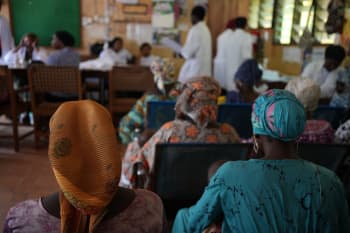
Desperate to find out what was wrong, Naporo brought the twins to the hospital, where they were diagnosed with malaria and a skin infection. Following treatment in the inpatient care ward, they were referred to the Child Welfare Clinic, a weekly service offering vaccinations, growth monitoring, and nutritional counseling. Of the two boys, Abdul-Hamid was struggling more than his brother. When Sulemana first took his measurements, she found he weighed only 6.2 kilograms, nearly 30% below the ideal weight for his age. He had a mid-upper arm circumference of 11.1 centimeters, meeting the criteria for severe wasting — the most life-threatening form of malnutrition in young children.
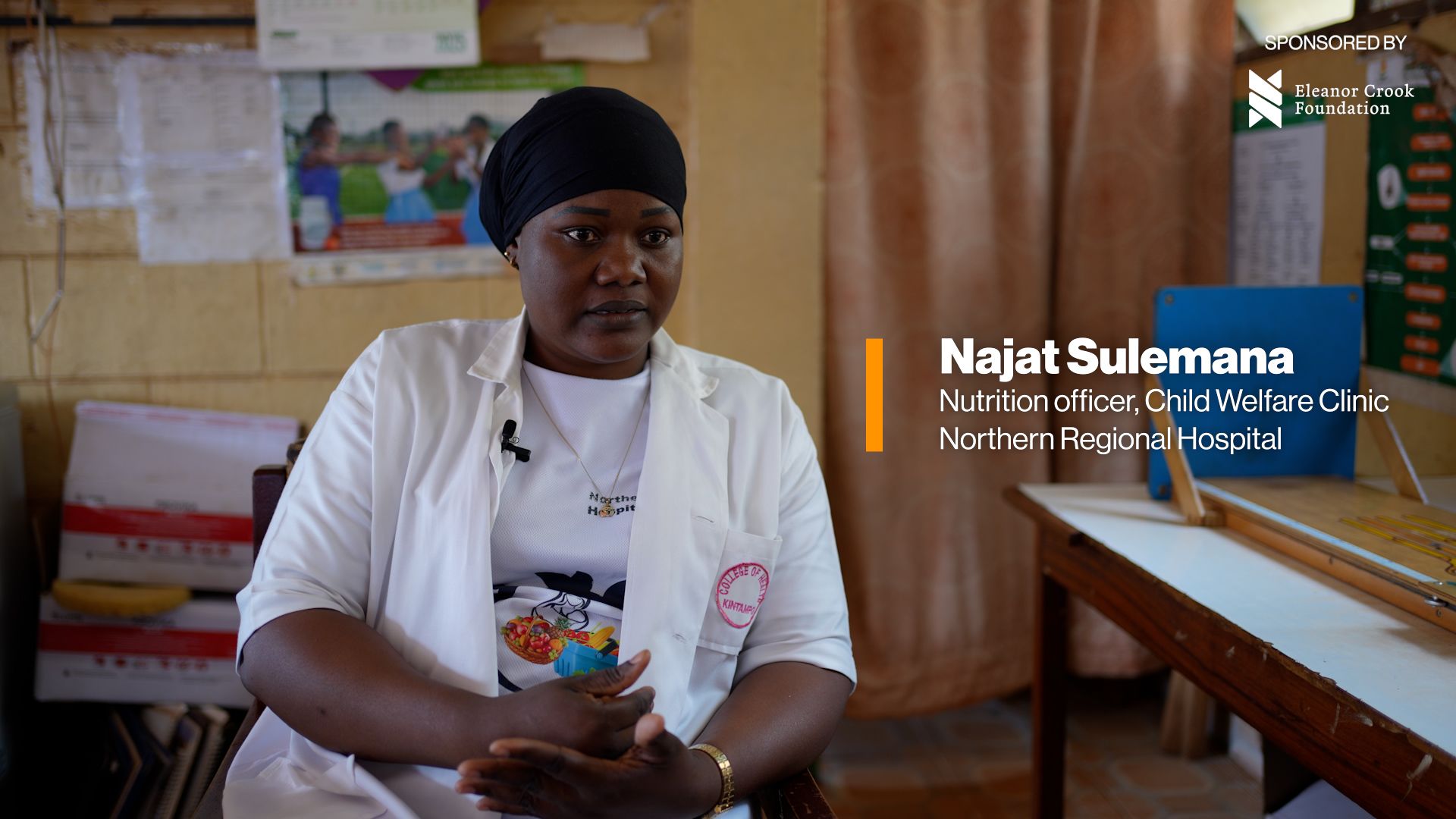
Najat Sulemana, nutrition officer at Northern Regional Hospital in Tamale, northern Ghana
Najat Sulemana, nutrition officer at Northern Regional Hospital in Tamale, northern Ghana
Abdul-Hamid was promptly enrolled into the clinic’s community-based management of acute malnutrition program, or CMAM, which provides wasted children with a steady supply of ready-to-use therapeutic food, or RUTF. A high-calorie, nutrient-dense paste made from peanuts, milk powder, oil, sugar, and vitamins and minerals, RUTF has long been considered the gold standard for treating cases of severe wasting in young children and can help a child recover within six to eight weeks.
Just a few years ago, Abdul-Hamid’s journey to recovery might have been much less certain. For years, treatment for children with severe wasting in Ghana was hampered by a shortage of the life-saving product needed to treat it and a lack of health workers trained in nutrition care. Now, the country is on a mission to bring nutrition commodities and services to every family that needs them — not just RUTF for severely wasted children, but also multiple micronutrient supplements, or MMS, for pregnant women, to prevent malnutrition before it starts. The ultimate aim is to integrate these nutrition services — and the funding behind them — fully into Ghana’s health system, so that every mother and child in need can access them, for decades to come.
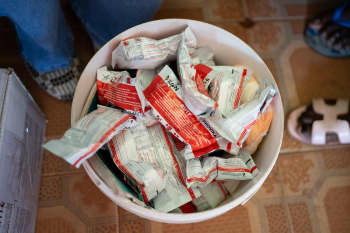
A child has their MUAC measurement taken to assess their nutritional status and screen for malnutrition.
A child has their MUAC measurement taken to assess their nutritional status and screen for malnutrition.
A health worker measures the length of a child as part of the growth monitoring and promotion service at the Child Welfare Clinic at Northern Regional Hospital.
A health worker measures the length of a child as part of the growth monitoring and promotion service at the Child Welfare Clinic at Northern Regional Hospital.
A child is weighed as part of the growth monitoring and promotion service at the Child Welfare Clinic at Northern Regional Hospital.
A child is weighed as part of the growth monitoring and promotion service at the Child Welfare Clinic at Northern Regional Hospital.
Adama Musah gives RUTF to her daughter, Kawsada Musah, who is 18 months old and was severely wasted when she came to the clinic three weeks earlier.
Adama Musah gives RUTF to her daughter, Kawsada Musah, who is 18 months old and was severely wasted when she came to the clinic three weeks earlier.
Addressing the roots of malnutrition and protecting mothers
Severe wasting, when a child has an extremely low weight for their height, affects around 13.6 million children globally under the age of 5, including at least 62,000 in Ghana. Research shows that early childhood malnutrition can impair brain development, with lasting consequences for educational achievement, productivity in adulthood, and ultimately, entire economies.
The roots of wasting and other poor nutrition outcomes can take hold long before a child is born. Undernourished women are more likely to give birth to children who are born too small or who go on to develop malnutrition in their first months of life. Deficiencies in iron, vitamin A, and iodine are the most common micronutrient deficiencies worldwide and particularly affect children and pregnant women. Around 51% of pregnant women in Ghana are anemic, a condition linked to premature births, low birth weight, and potentially fatal maternal complications like postpartum hemorrhage.
Samira Adam, a midwife at Northern Regional Hospital, is all too familiar with the symptoms of anemia. “At the antenatal clinic, most of the women come with low Hb [hemoglobin]. Some come with difficulty in breathing, others have dizziness,” she says.
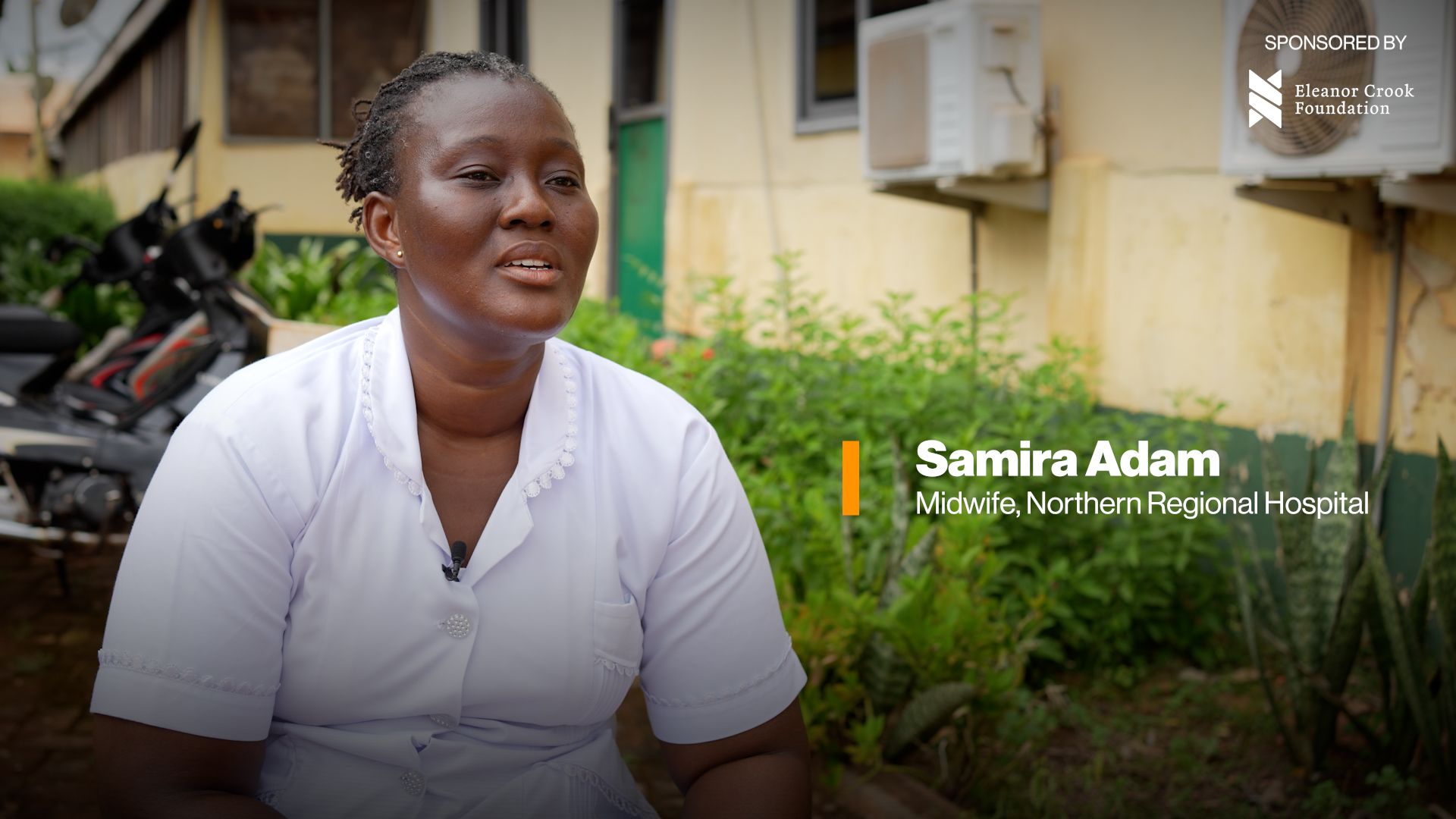
Samira Adam, a midwife at Northern Regional Hospital
Samira Adam, a midwife at Northern Regional Hospital
She encourages women to eat plenty of iron-rich local foods, such as green leafy vegetables, beans, eggs, and meat, if they can afford it. However, poverty and cultural factors can be a barrier, she says. Financial dependence on husbands and traditional household decision-making structures, for instance, can limit women’s control over their own diet and healthcare.
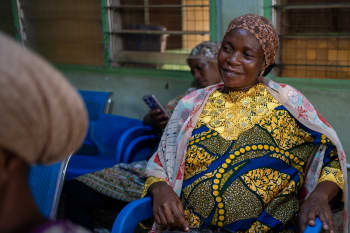
Micronutrient supplementation is recommended for all pregnant women globally, given the extra nutritional needs of the developing baby. But in many low- and middle-income countries, iron and folic acid supplementation, or IFA, has historically been the only option available. That is now changing, as a growing number of countries are moving towards offering pregnant women MMS, a more comprehensive supplement that contains 15 different vitamins and minerals. Evidence shows that MMS is more effective than IFA at preventing babies from being born too small or stillborn, and is as effective at preventing anemia.
In line with WHO guidelines, a pilot project and implementation research is currently taking place in three of Ghana’s 16 regions, including the Northern Region, to help guide a nationwide scale-up and long-term adoption of MMS in place of IFA. “We see [MMS] as one of the interventions that can solve multiple complications that may come if it is not in place,” says Saviour Yevutsey, acting director of pharmaceutical services at the Ghanaian Ministry of Health.
The research, which is funded by the Eleanor Crook Foundation, or ECF, and implemented by the Ghana Health Service and the Clinton Health Access Initiative, or CHAI, will help the government make decisions about how best to ensure acceptability and adherence to MMS among pregnant women, such as the type of packaging used. It is part of a broader effort to establish sustainable, government-led nutrition services in Ghana.
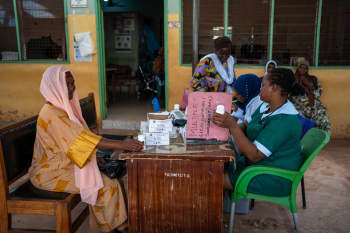
Midwives Hamdiyatu Abdullahi, left, and Cecilia Whyte, right, attend to Mariam Fuseini, center, who is pregnant with her first child, at Tamale Central Health Center.
Midwife Hamdiyatu Abdullahi attends to Mariam Fuseini, who is pregnant with her first child, at Tamale Central Health Centre.
Nutrition counseling, including how to ensure a balanced diet across different food groups, is offered to every pregnant woman as part of routine antenatal care.
Nutrition counseling, including how to ensure a balanced diet across different food groups, is offered to every pregnant woman as part of routine antenatal care.
Nutrition officer Adisa Mohammed counsels Mariam Fuseini on how to take MMS and provides her with a bottle containing 180 tablets, a six-month supply.
Nutrition officer Adisa Mohammed counsels Mariam Fuseini on how to take MMS and provides her with a bottle containing 180 tablets, a six-month supply.
From donor dependence to government ownership
Nutrition programs around the world have traditionally been funded by donors — a model hit hard by the dismantling of USAID and reductions in Western aid budgets. Previously, USAID funded half the world’s RUTF supply, produced by a small number of specialized manufacturers and distributed worldwide through UNICEF. That came to an abrupt end in early 2025 with the USAID stop-work order. The U.S. State Department has since partially restored funding for RUTF, but mostly for acute humanitarian crises, not routine programs like Ghana’s.
Even before these more recent cuts, Ghana had been experiencing the impacts of inconsistent donor funding for nutrition. The country adopted the WHO-recommended CMAM approach in 2007, shifting treatment for severe malnutrition from in-patient hospitalizations to communities and outpatient clinics. From the outset, the program relied heavily on donors for RUTF procurement, equipment, and health worker training. A national scale-up of CMAM services was planned for 2013 to 2017, but the lack of dedicated budget lines led to frequent shortages of RUTF. “We would identify [severe malnutrition] cases, but we could not treat them. The only support we would offer was nutrition counseling which was far from enough,” says Olivia Timpo, deputy director of nutrition in the Family Health Division of the Ghana Health Service.
Without a steady RUTF supply, health workers sometimes resorted to using blenders to mix the ingredients together themselves in health facilities — but only families with the means to buy the ingredients could be helped. “Those who couldn't afford ingredients, we couldn’t provide with the RUTF,” Sulemana recalls.
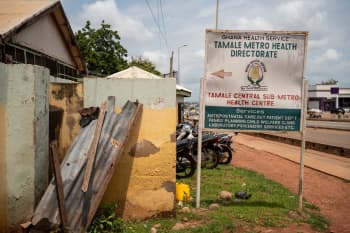
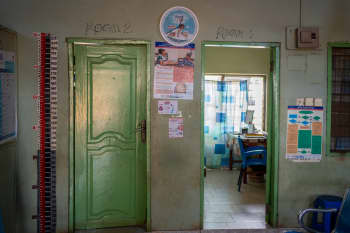
Realizing the crucial need for sustained financing, in early 2024 the Ghanaian government turned its focus toward integrating key nutrition services and commodities into the national health system. By then, Ghana wasn’t just short on RUTF sachets — it had very few CMAM-trained health workers, says Dr. Maame Asamoa-Amoakohene, associate director of programs in Ghana for CHAI.
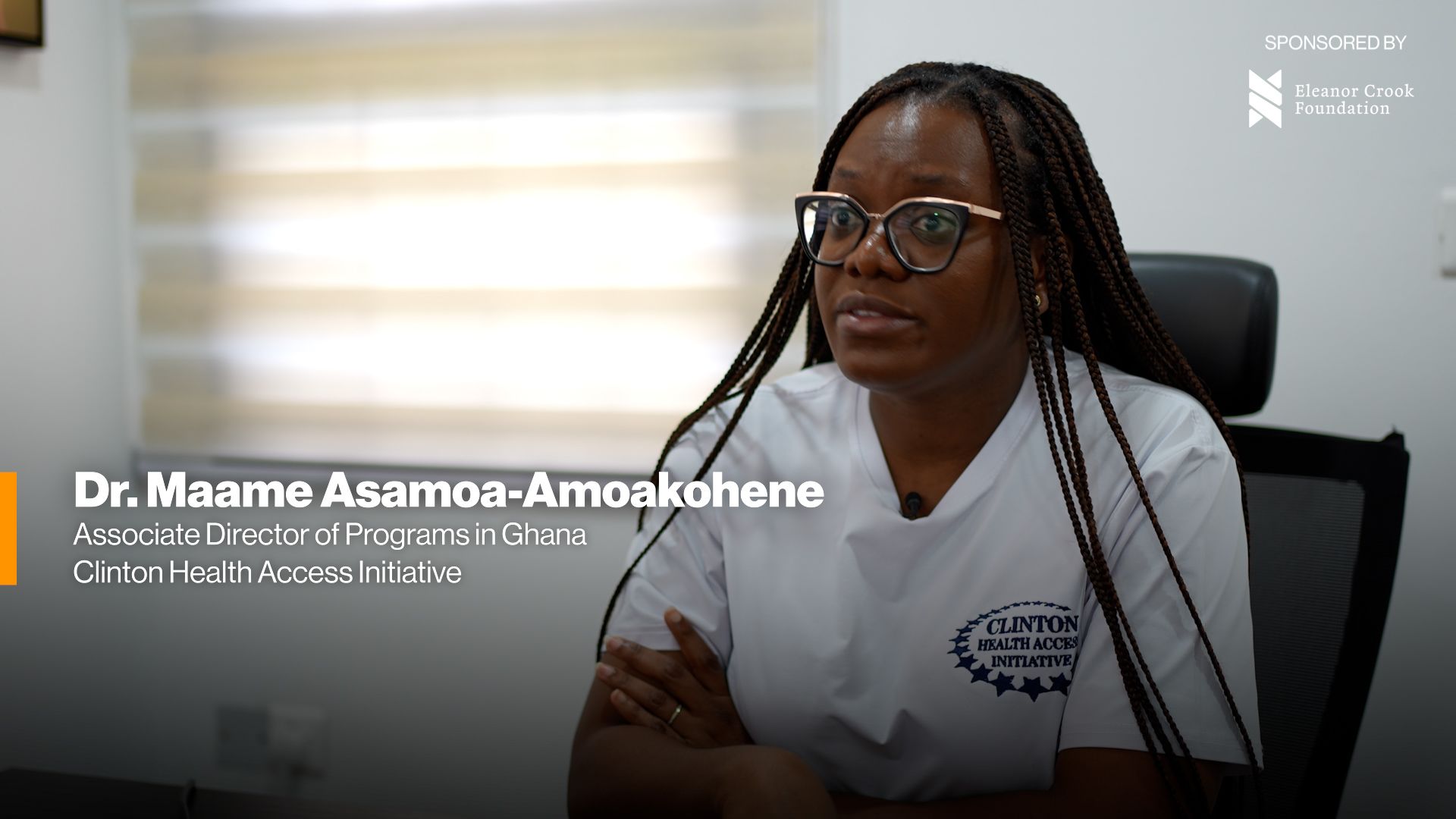
Dr. Maame Asamoa-Amoakohene, associate director of programs in Ghana for Clinton Health Access Initiative
Dr. Maame Asamoa-Amoakohene, associate director of programs in Ghana for Clinton Health Access Initiative
To help ensure all children and pregnant women receive the nutritional care they need, year after year, CHAI and ECF have been supporting Ghana with the complex process of building a lasting, government-owned system for wasting treatment and MMS delivery. The initiative echoes a wider push for health sovereignty known as the Accra Reset spearheaded by Ghanaian President John Dramani Mahama, who has called for African countries to reduce their dependence on external donors and build resilient, self-determined health systems.
The work includes strengthening the product supply chain, training health workers on protocols, and building the necessary policy and financing mechanisms to enable a national scale-up. Training health workers to provide nutrition counseling, prenatal vitamins, and screening for malnutrition cases reduces the need for more costly intensive care, easing pressure on the health system.
So far, over 20,000 children with severe wasting have been enrolled onto the program, while nearly 10,000 pregnant women have received MMS as part of the pilot and implementation research, according to CHAI. The bigger measure of success, though, is whether Ghana can sustain this without CHAI and ECF. “By the time we are done with this project, the government should be able to take up full ownership, lead this, and run with it,” Asamoa-Amoakohene says.
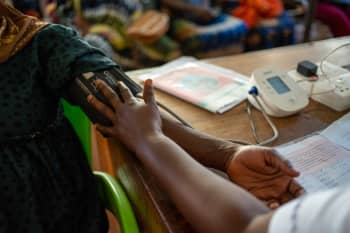
Ghana is one of three countries — alongside Nepal and Senegal — in ECF's Scaling Partner Country Portfolio, which provides time-bound, catalytic funding to help governments scale high-impact malnutrition solutions.
"Government ownership is critical to sustaining impact. Our role as a donor is to help governments take proven malnutrition solutions to scale in ways that can be sustained over the long term.”
Making nutrition financially sustainable
A major step for ensuring financial sustainability is coverage under the country’s National Health Insurance Scheme, or NHIS. While IFA is already covered by the NHIS, MMS, as a new product, has to be added, as does RUTF, which to date has not been covered by insurance. MMS and RUTF are now included in the Essential Medicines List and Standard Treatment Guidelines, setting the stage for NHIS inclusion. “The aim is to ensure that we strengthen the supply chain system so that [the] government owns procurement and distribution, and we are able to plan based on our specific needs, and not assumptions,” Timpo says.
Olivia Timpo, deputy director of nutrition in the Family Health Division of the Ghana Health Service
Olivia Timpo, deputy director of nutrition in the Family Health Division of the Ghana Health Service
Established in 2003, Ghana's NHIS was the first nationwide scheme of its kind in sub-Saharan Africa. Funded mainly through a value-added tax, social security contributions, and premiums from those who can afford them, it exempts the poorest Ghanaians from paying altogether. The scheme has faced serious financial sustainability and coverage challenges in the past, but recent reforms — including an "uncapping" of its main funding levy and the introduction of the Free Primary Healthcare Policy, which has helped boost coverage — have begun to turn that around.
“[In Ghana] we're seeing an increasing focus on investing in primary healthcare prevention and promotion — of which MMS is an example — and having more of a population-based financing approach. That holds the most promise for long-term sustainability,” says Cheryl Cashin, managing director of health and nutrition at Results for Development, a global nonprofit organization with expertise in health and nutrition financing.
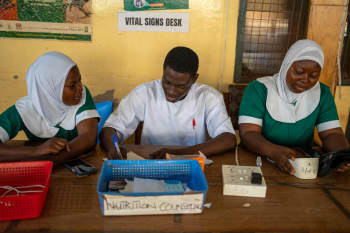
“Partners are leaving, monies are being reprioritized, and so we need to take up the challenge as a country, and the government must be committed.”
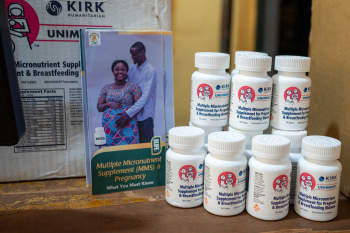
MMS and RUTF are currently provided through Ghana’s partnership with CHAI and ECF, with MMS bottles donated by Kirk Humanitarian. Once added to the NHIS medicines list — a process which is nearing completion for both commodities — health facilities will be able to purchase the products from regional medical stores, which will stock them from suppliers selected through a public procurement process, Yevutsey says. Health facilities will then be reimbursed by the NHIS for the products they’ve purchased.
Pooling demand this way is expected to lower prices, while NHIS reimbursement gives suppliers steady, government-backed payment. To protect against future supply shocks, the government is also holding talks with domestic producers to explore local manufacturing, Yevutsey says. “There should be no case where they [health workers] prescribe, and we say, ‘We ran out of it,’” he adds.
The next phase of the initiative will aim to build on the government’s leadership and strengthen the existing system. ECF and CRI Foundation, a U.S.-based philanthropy, will support CHAI as an enabling partner to help build out the reimbursement mechanism and support national scale-up.
“A healthy population means that you are going to have healthy people go to school, healthy and intelligent people who come out of school, and then they will become the leaders of this country.”
An investment in Ghana’s future
For Yevutsey, one of the biggest challenges at the Ministry of Health — for Ghana and other countries looking to transition to domestically financed nutrition programs — is building the economic case for making nutrition a budget priority. “Partners are leaving, monies are being reprioritized, and so we need to take up the challenge as a country, and the government must be committed,” he says. “This is an investment for the future.”
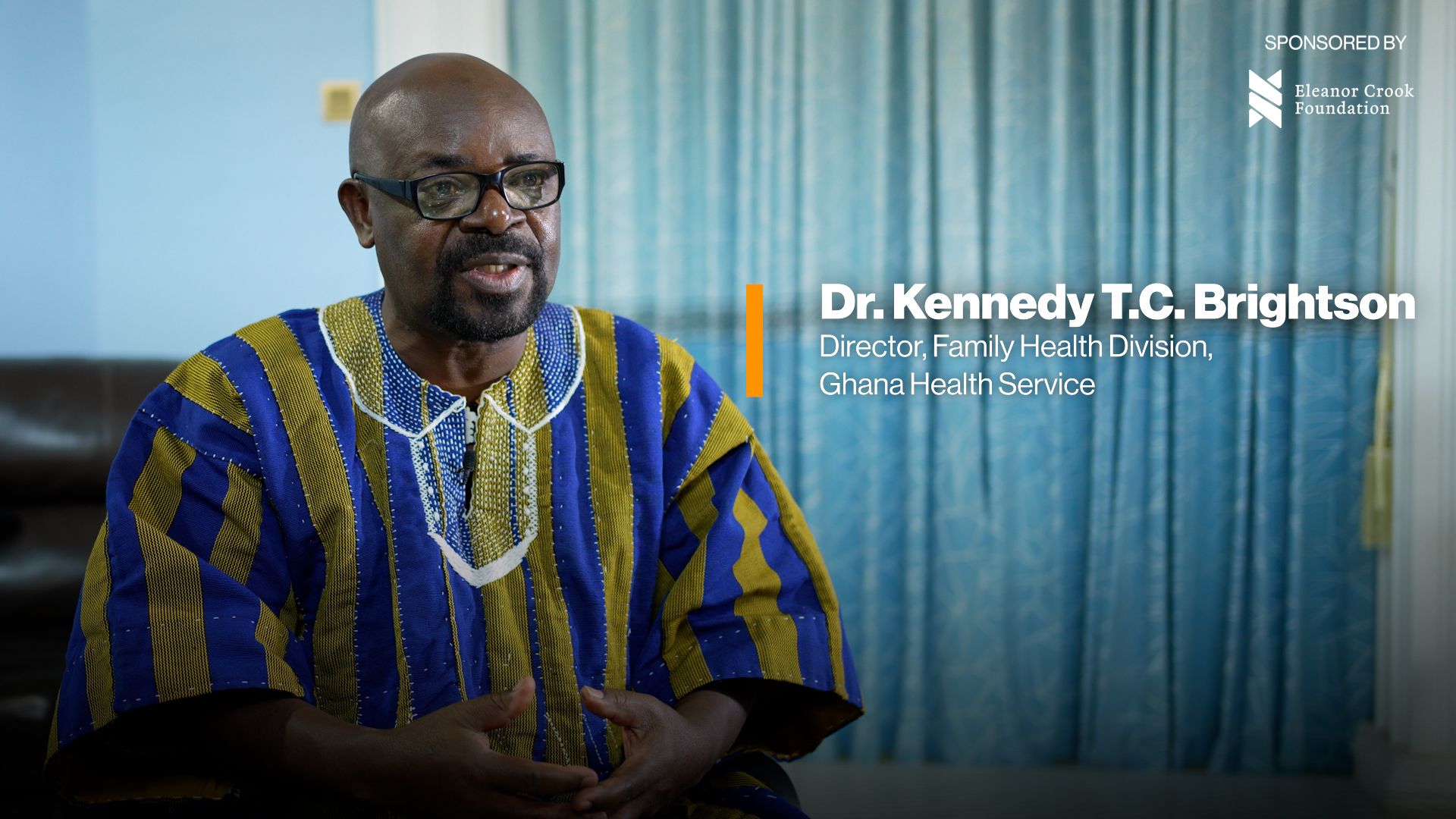
Dr. Kennedy T.C. Brightson, director of the family health division at Ghana Health Service
Dr. Kennedy T.C. Brightson, director of the family health division at Ghana Health Service
That investment means preventing malnutrition where possible, helping health workers detect and treat it early, and ensuring that essential treatments are available when families need them.
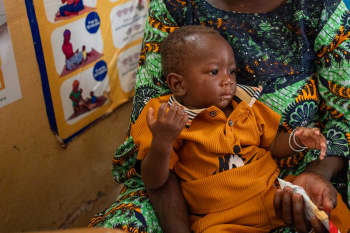
Reliable services also build trust. Back at Northern Regional Hospital, Abdul-Hamid’s recovery — thanks to the availability of a full course of RUTF, and the dedication of health workers such as Sulemana — has convinced his grandmother that other caregivers need to seek out these services too. Since he started taking RUTF, he's a different child, she says: "Now he crawls out and plays. He only comes back or cries when he's hungry.” And if she sees a mother with a wasted child in her community, she says she'll bring them to the hospital herself.
Reporting, photography, and production: Naomi Mihara
Editor: Olivia Scotti
Translation and interpretation: Abdul Jalil Naabeli
With special thanks to the Clinton Health Access Initiative team in Ghana
SPONSORED BY
 Built with Shorthand